Credit, not a lock
A record says who registered a pattern and when. It never stops anyone using a stitch, making the piece, or sharing a free pattern freely.
 krowshea™
Join beta
Krowtracks™
Krowtracks registers a crochet pattern to the designer who made it. Krowshea checks it stitch by stitch, the designer makes it and photographs it with its own numbered card, and the record is signed. If a copy is registered later, reworded or recoloured, its stitches still lead back to the earlier registration.
Coming with Krowshea. Krowtracks is built and being tested; registration opens with the beta.


Why it matters
Designers are watching their photos turn up in other people's shops, sometimes recoloured with AI into colourways that were never made. Buyers pay for patterns that don't match the picture, or can't be crocheted at all. Beginners blame themselves.
Krowtracks gives a real pattern something a fake can't easily have: a dated, signed record that it was checked stitch by stitch, made, and photographed by the person who registered it. And a way for anyone to look it up.
How it works
Krowshea works every stitch and checks every count. Only a pattern that checks out can be registered. It gets its code, its number and its date.
Registered“Teal Granny Square” by Shea as MW6X-GNHX (No. 1)
A trading card at real size, with the pattern's name, Krowshea's picture of it, its stats, its code and a QR code.
One of the finished piece on its own, for your card. One with the card beside it, as proof. The card didn't exist until the pattern was registered, so a piece photographed with it was really made.
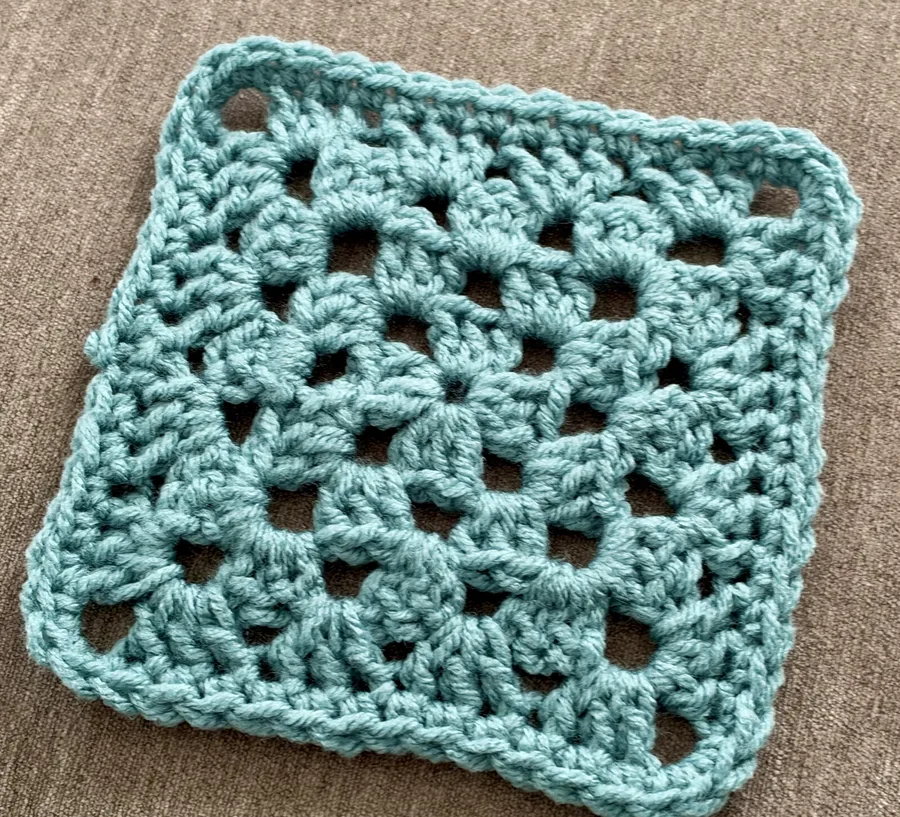
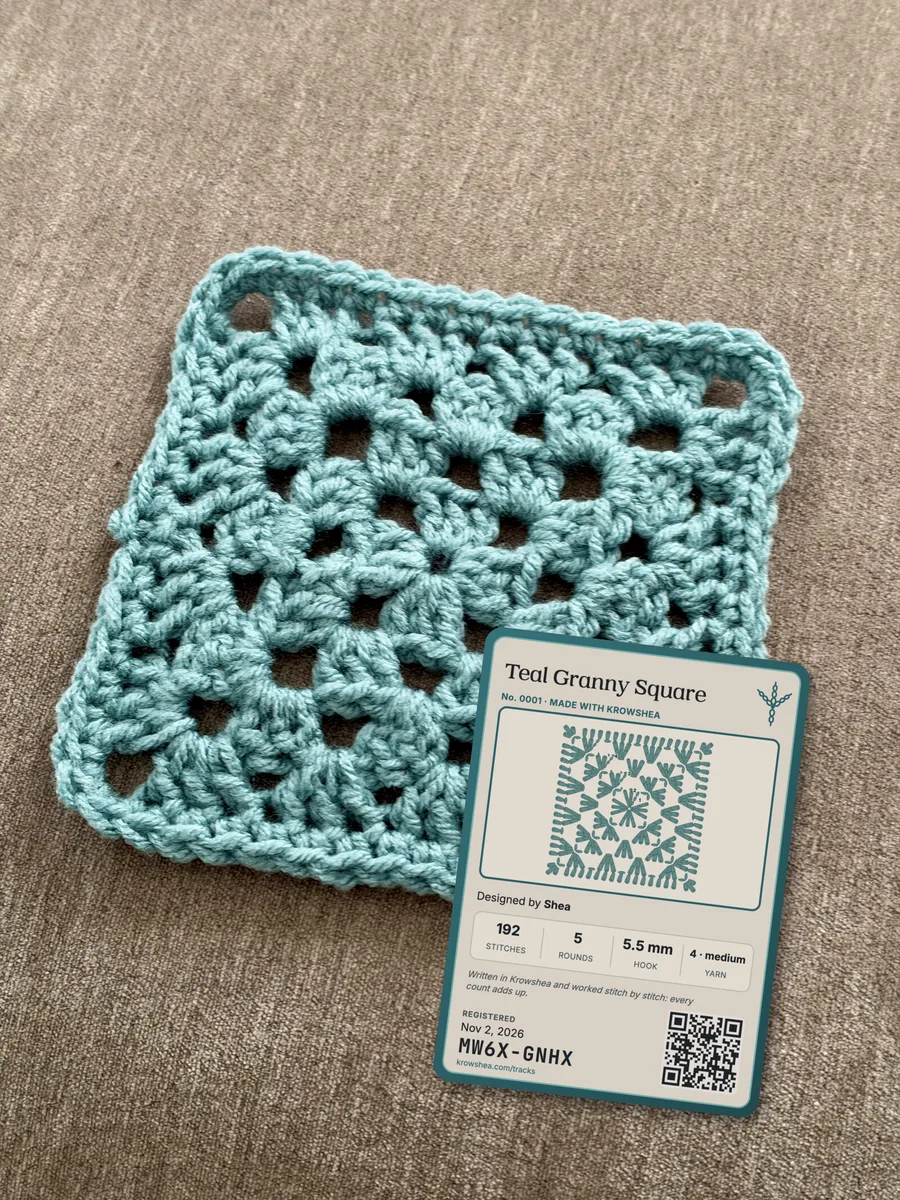
A person reviews the proof. The record is signed, the pattern gets its page and its place in the search, and the card fills in with your photo and the Krowtracks seal.
The card
Every registered pattern gets its own card and its number in Krowtracks, in the order patterns were registered. No. 0001 is the first. Print it, frame it, put it in the pattern, share it.
The seal. Once a person has checked the proof, the seal is stamped on the card, on the pattern's record page and in the search. It always carries the pattern's code, and the code opens the one record it belongs to, so a seal copied onto another pattern still leads back to the registered one.
A badge for your shop. Every record comes with its own badge, ready to paste into your website or download for listing photos. It links to the pattern's record, so anyone can check it.
Traced by its stitches
Krowtracks fingerprints a pattern twice: its exact words, and its stitches. The stitch fingerprint comes from what the pattern makes, every stitch and where it's worked, not how it's written. Put a pattern into UK terms, reword it, reformat it or recolour it, and its stitches are the same.
When a pattern is registered, Krowtracks compares it with every pattern registered before it. A copy is listed with the original on its record, its card and in the search, for everyone to see.
Tracedthe same stitches as “Teal Granny Square” by Shea, registered 2026-11-02 (MW6X-GNHX), written differently, colour changes in the same places
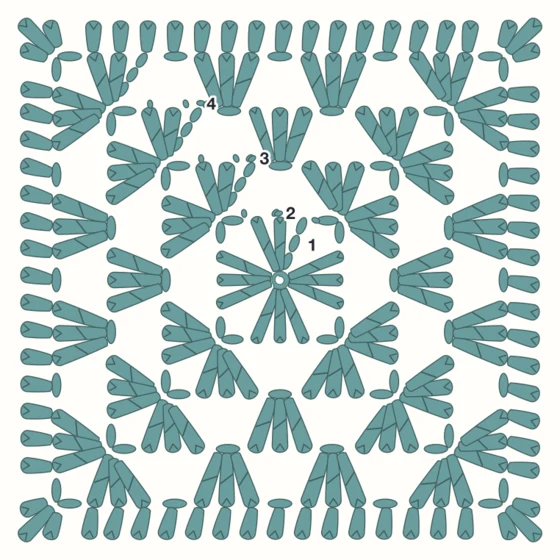
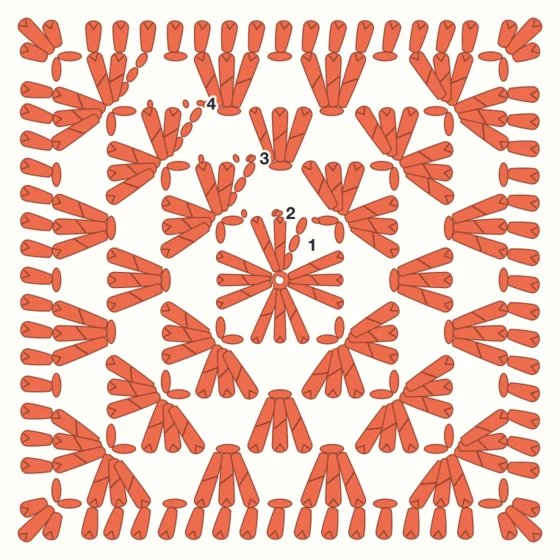
Drawn from the stitches
Every record shows the designer's photo beside a picture Krowshea draws from the pattern itself, stitch by stitch: where each stitch goes and where the colours change. Yarn, hook and tension change how a finished piece looks, but not those. A photo with different stitches, or colours changing in different places, wasn't made from this pattern as written.
Anyone can scan the card or type the code to open the record, and their browser checks Krowshea's signature itself. Drop a copy of the pattern on the page and it tells you whether it's word for word the registered one.
No AI inside. The checks, the fingerprints, the pictures and the signature all come from Krowshea's own code.

Fair to everyone
A record says who registered a pattern and when. It never stops anyone using a stitch, making the piece, or sharing a free pattern freely.
A magic ring of six, a granny cluster round: small rounds and rounds many designers use never count as copying.
Registering a pattern is free, a few a day for each designer, so no one can flood the record with patterns they didn't make.
A pattern published years ago can be registered with its original photo and where it was first published.
A few useful answers
Nothing can stop every copy. What Krowtracks gives a designer is a dated, signed record that they registered the pattern, made it and photographed it, and a way for buyers and platforms to check. A copy registered later is shown with the original.
No. Krowshea's own code checks the stitches, makes the fingerprints, draws the pictures and signs the record. Reading the QR code in a proof photo is plain code too.
No. There's no blockchain and nothing to buy or trade. A Krowtracks record is a signed entry in Krowshea's register, and the card is yours to print and share.
Yes. Each record's page has a badge with the pattern's number and code, as code to paste into a website or as a picture for listing photos and posts. The badge links to the record, so a buyer can check it in one tap. Anyone can copy a picture, so the record is the proof: a copied badge only leads back to the real designer.
Only the person who reviews it. Your showcase photo is public; the proof stays private, and its fingerprint is kept in the signed record in case it's ever needed.
No. The public record shows Krowshea's colour picture of the piece, not the symbol chart or the written pattern, unless you choose to show the chart for a free pattern.
No. A pattern written in Krowshea is marked Made with Krowshea. A written pattern that Krowshea reads and checks is marked Checked by Krowshea.
Krowtracks opens with the Krowshea beta. Join the beta to hear first.
Be one of the first